Showing posts with label OUGD504. Show all posts

Wednesday, 1 January 2014

OUGD504 Design for print: J Hewit Leather research

OUGD504
DESIGN FOR PRINT
J HEWIT SAMPLES
LEATHER RESEARCH


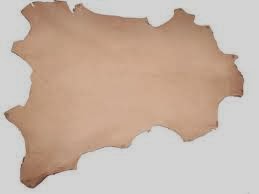
Researching in to all the different types of leather that this one company has to offer has shown me the true range available. 

Wednesday, 18 December 2013

OUGD504 Design for print: Leather research

OUGD504
DESIGN FOR PRINT
LEATHER RESEARCH


Vegetable tanning is an ancient and traditional craft process that tanneries have passed down over the years, using both ancient recipes and more recently state-of-the-art technology.

Vegetable tanning shows off leather in it's most natural state and you can really see the skill in the tanning process and also the finished product.

The transformation from raw hides into a material that will last a long time is a process that happens slowly in wooden drums or in tanning pits. Vegetable tanning is the most enviromentally friendly way to tan leather, there are no chemcals used respecting the environment due to the use of natural ingredients rather than chemicals. It is an astonishing process based on the use of natural tannins, using modern technologies and machinery but mainly it relies on the slow passage of time.

Among the various tanning methods, vegetable tanning is the most traditional and the most recognisable, it is the only form of tanning that is able to give leather unique characteristics, retaining the natural flaws and markings. It is also the most environmental-friendly. It is able to join comfort and look, fashion and tradition, uniqueness and versatility in the product.

Raw materials used for vegetable tanning are natural tannins, available in liquid or powder form, obtained from different part of plants including woods, barks, fruits, fruit pods and leaves. The most common tannins are obtained from Chestnut wood (Castanea sativa), Quebracho wood (Schinopsis lorentzii), Tara pods (Caesalpinia spinosa), Catechu (Acacia Catechu), Chinese gallnut (Rhustyphina semialata), Gambier (Uncaria gambir), Mimosa bark (Acacia meamsii), Oak wood (Quercus sp), Sumac (Rhustyphina coriaria), Turkish gallnut (Quercus infectoria) and Valonia Oak (Quercus macrolepis).

ADVANTAGES OF VEGETABLE TANNING

Vegetable tanning is environmentally friendly; meaning any leather products that have been vegetable tanned can be recycled.


Vegetable tanning is an age old tradition, so most tanneries have very skilled craftsmen producing and dyeing the leather.


Due to the natural tannins used, vegetable tanned products are unique and have their own life, they are not the same for their entire life, but they change, continuously, for the better developing a patina over time.


The colours that vegetable tanning produces are rich and warm tones that look completely natural.


Vegetable tanned leathers are more valuable and thus sold at a higher average price compared to chrome tanned leathers.

DISADVANTAGES OF VEGETABLE TANNING


The average process time of vegetable tanning is quite similar to chrome tanned leather but it can take up to 60 days to produce certain leathers.


Products that have been vegetable tanned are more expensive. They require much more skill to tan the hides, this means they are of better quality.


The colours you can produce from vegetable tanning are limited


Direct heat can cause vegetable tanned products to shrink or crack

Monday, 2 December 2013

OUGD504 design for print: Leather journal visual research

OUGD504
DESIGN FOR PRINT
LEATHER JOURNAL VISUAL RESEARCH


OUGD504 Design for print: Chronologies of print

OUGD504
DESIGN FOR PRINT
CHRONOLOGIES OF PRINT

CHRONOLOGIES OF PRINT

HOW PRINT CHANGED THE WORLD

If something is printed we believe it is true and correct – although we are more media savvy now.

Standardises information

Documentation. Communication. Reproduction.

200AD
Woodcut
East Asia
Bulks expensive stock

1400AD
European print

650AD
China
Book
Religion – Buddhism

Maps

Japanese
Woodblock
2000AD

Communication. Reproduction. Documentation.

Knowledge is power

1000AD
First movable type

1450
Guttenberg Press
Literacy boomed
Beginnings of the class divide
Trickle down theory


Nationalistic

15th – 18th Century
Production of printed books boomed

Fueled by countries with formulated religions

Same time as scientific boom

Everything becomes visual

Glyphs developed through laziness

Text & communication

Marshall McLuhan
-       Medium is the message
-       1911-1980
-       New technologies


Individuality
Democracy
Capitalism
Nationalism

Linotype
1884
Line casting
Revolutionised the printing press
Development of keyboard and technology

Linotype: The Film 

1st etching
Religious theme
Suits of armour
Mass communication

Moulin Rouge
Lithography
Not supposed to be attractive
Advertising

William Morris
Victoriana
Excess
Asian influences (middle-eastern)

1917
Crafts movement
Propaganda

War changed everything

1936 – Spanish civil war


1941 – War poster


1930 – Modernism – Mondrian

German reform
Propaganda
Clean
2 colour separation


Versatile

1930s poster
Clean lines
‘Keep your teeth clean’


Communication. Reproduction. Distribution.

Daily Star
-       Propaganda
-       Anti-Muslim
-       Believed

Andre the Giant
7 ft 4
Afraid of snakes
Fight with Jake ‘The Snake’ Roberts
Lost all support and respect
Shepard Fairey
“Street artist”
‘Andre the Giant has a posse’
Obey
Community
Low Fi


Obama Print
-       Print changed the world


Sunday, 1 December 2013

OUGD504 Design for print: Print Processes research

OUGD504 
DESIGN FOR PRINT
PRINT PROCESS RESEARCH


I sourced most of my information for my print book from theses two books as well as online resources.


The choice of print process is related to the choice of print materials. The main printing processes can be defined according to the printing surfaces used. Letter press is a relief process, where the image to be printed is above the background; this raised surface is inked by rollers and then pressed against the paper to make the impression.

Screen printing

The use of stencils to apply an image goes back centuries, but it was only at the beginning if the 20th century that this was allied to the use of a screen, giving the process its name. It is perhaps the most versatile of printing processes. 
Basically, it is the process of using a stencil to apply ink onto a substrate, whether it be t-shirts, posters, stickers, vinyl, wood, or other material.

Originally the screen was made of silk hence the name 'silk screen printing' in current times synthetic fibres such as nylon or polyester are used. the screen is stretched tightly over a a metal/wooden frame. Stencils and cut outs can be used to create basic shapes and patterns however the use of light sensitive coating on a screen allows people to expose art work such as photography or computer arts directly on to the screen which allows for a higher level of detail. Ink is then spread across the screen with the use of a rubber squeegee that squeezes the ink through the screen. The blocked areas of the screen do not allow the ink to pass through thus creating your desired art work.

Screen printing lends itself well to printing on canvas. Andy Warhol, Rob Ryan, Blexbolex, Arthur Okamura, Robert Rauschenberg, Roy Lichtenstein, Harry Gottlieb, and many other artists have used screen printing as an expression of creativity and artistic vision.


The fact that the process can apply a very thick film of ink on to a large sheet makes it ideal for posters. Also, virtually any type of material can be printed on to such as wood, fabric, glass plastic and metal. screen printing is therefore used for metal signs, CDs, teeshirts, bottles, transfers and many more. 

Screen printing has a distinct appearance because of its thick ink. Although this is an advantage of most screen printed products it does however mean that small type does not always reproduce very sharply. Fine details of photography is also not well suited to this process, the nature of the course screen mess that halftone screens of 50 are normally the limit. Large bill boards are often printed in sections by screen printing but are viewed from a distance so the course screen is not visible to the naked eye. A huge advantage of screen printing is the wide array of colours you can make such as fluorescent and metallic.

Letter press.

Letter press was the main printing process used until 1970s when it was over taken by offset lithography and is essential now a redundant process within commercial use, however this doesn't hinder the amazing potential and beauty of the process.

Letterpress printing is a technique of relief printing using a printing press. A worker composes and locks movable type into the bed of a press, inks it, and presses paper against it to transfer the ink from the type.

Composition, or typesetting, is the stage where pieces of movable type are assembled to form the desired text. The person charged with composition is called a "compositor".
Traditionally, as in manual composition, it involves selecting the individual type letters from a type case, placing them in a composing stick, which holds several lines, then transferring those to a larger type galley. By this method the compositor gradually builds out the text of an individual page letter by letter. In mechanical typesetting, it may involve using a keyboard to select the type, or even cast the desired type on the spot, as in hot metal typesetting, which are then added to a galley designed for the product of that process.

After a galley is assembled to fill a page-worth of type, the type is tied together into a single unit so that it may be transported without falling apart. From this bundle galley proof is made, which is inspected by a proof-reader to make sure that the particular page is accurate.

The working of the printing process depends on the type of press used, as well as any of its associated technologies (which varied by time period).

Hand presses generally required two people to operate them: one to ink the type, the other to work the press. Later mechanized jobbing presses require a single operator to feed and remove the paper, as the inking and pressing are done automatically.

The completed sheets are then taken to dry and for finishing, depending on the variety of printed matter being produced. With newspapers, they are taken to a folding machine. Sheets for books are sent for bookbinding.


Wednesday, 27 November 2013

OUGD504 Design for print: Evolution print lecture

OUGD504
DESIGN FOR PRINT
EVOLUTION PRINT
 Aluminium print 
 CTP computer plate system

 20 ml around the edge 700 x 1000

Gloss, silk , uncoated
Uncoated - Flatter images , hands on feel , when the dot hits the paper slight spread
Gloss & Silk , images a lot sharper , more use on corporate jobs.

Weight on paper , Uncoated is thicker than gloss , gloss is more of a compressed feel.

Litho Vs. Digital 

- Litho 5 presses
- Litho to people is better print but more expensive
- Maximum sheet size for Digital is SR3 32x450

- Vegetable based ink
- Ink powder based 

Cost 

- Click Charge 
- Per sheet 5 - 10p 1 colour
- Full colour sheet 30p per side

Mistakes people make when sending things to print

- Bleed / 3ml and include strokes and crop marks
- Send artwork over as art work incase things need tweaking
- Spot colours in work that aren't needed change to CYMK
- If you have any foils uv and perforation set that up as an individual spot colour in another file.
- Image size if you create a large file for a small space takes up to much time.

Booklet try work in 8 , 16's or 32's.


Work in turn you take the stock out turn it over and round and feed it back through. If your working with colour its 8 sheets not 4.

Can print onto coloured stock but sometimes evolution put a tint into the stock.

Fluorescent stock rare you can print onto it but fluorescent inks work better.

Examples from Evolution :